Oregon’s Distro Shake Up and Day One’s Place In It
As you may have heard, it was announced last Monday that Columbia Distributing has entered into an agreement to acquire Point Blank Distributing, with the purchase expected to be finalized by the end of March.
For context, Columbia has been in business since 1935 and is the largest beverage distributor in the Pacific Northwest, representing a 64% market share in Oregon and a 61% share in Washington. As for Point Blank, they were founded in 2003 and are the 3rd largest distributor in Oregon behind Columbia and Maletis Beverage, with the latter also being founded in 1935.
Beyond the obvious differences from Point Blank in both company age and size of operations, Columbia and Maletis are predominantly focused on the off-premise sales (i.e. grocery and convenience stores) of national brands, with Columbia representing the Miller & Coors (Molson Coors) portfolio and Maletis representing the Anheuser-Busch (AB-InBev) portfolio. Both houses also work quite successfully with a number of local craft breweries as well.
Conversely, Point Blank’s craft beer portfolio has a regional brand focus with their largest suppliers being pFriem, Boneyard, Double Mountain, and Von Ebert. While they too have a sizable presence off-premise, their strengths lie in their on-premise sales (i.e. craft beer focused bottle shops & taprooms).
And here is where the appeal lies for Columbia and the red flags arise for craft beer fans…
Why This is Happening and The Impact
As someone who’s now worked in the craft beer industry for over ten years now, I’ve heard rumors of Columbia purchasing Point Blank many times, with it never quite coming to pass. So last week’s news wasn’t exactly a surprise, though once I was able to wrap my brain around the finality and impact it’ll have on the entire industry, I grew concerned.
It’s been reported that an estimated 177 Point Blank employees will lose their jobs, plus both of their satellite warehouses, located in Eugene and Bend, will be shuttered.
From my understanding, in speaking with friends and former employees who’ve been witnessing first hand what’s been happening, most if not all of Point Blank’s off-premise employees are being terminated with on-premise employees given the option to re-apply for their positions. Beyond that, I know limited information about who will stay on for the transition and who won’t.
What does seem readily apparent to me is that Columbia’s intent is to remedy three distinct weaknesses they have in the market – younger craft brands, on-premise sales, and customer service.
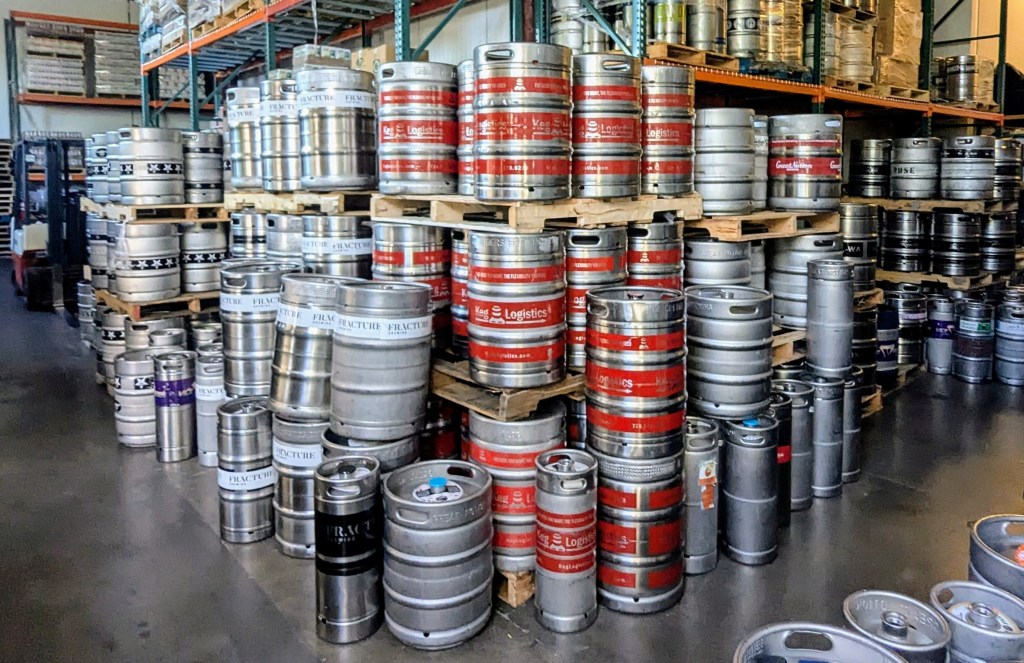
Point Blank has an excellent list of brands that have been growing since the pandemic. At present, Columbia’s strongest craft brands are all seen as classic or even legacy brands that aren’t quite moving the needle sales-wise in Oregon like they once did.
Most still make excellent beer and still enjoy steady sales in the market, yet it could also be argued that they aren’t market leaders for the segment. Further, from my own day-to-day perspective, these aren’t the brands being sought after by bottle shops and craft beer taprooms, as I don’t find them to be generally available.
Since the news broke last week, I spoke with at least 5 or 6 different proprietors and/or beer buyers at local taprooms and bottle shops who expressed their concern about this looming transaction. Industry wide, it could be said that Columbia’s reputation with on-premise accounts has soured, especially since the pandemic.
For many smaller or craft beer focused on-premise accounts, Columbia will only deliver beer once a month. And even then, they do have “minimums” that require a certain amount/volume to be purchased to even make a delivery, especially in smaller towns outside major cities. Bringing on Point Blank offers them an opportunity to improve their relationships with said buyers and potentially improve their standing with on-premise accounts.
And this is where the customer service element comes in. Point Blank has always been known for their demeanor with these all-important craft beer focused, off-premise locations, so I can only imagine it’s a major reason for this confluence of larger distributors.
Idealism vs Reality
I’ve read the press release (a copy of which I’ve pasted below) and it feels like a pie-in-the-sky view from Columbia about not only how great this merger is for Point Blank, but also, specifically, how they will “operate as a dedicated craft beer division within Columbia.”
For context, this is Columbia’s third acquisition of a distributor in the market since 2008 – they even posted them on their website:
In 2008, Columbia Distributing, Mt. Hood Beverage, and Gold River Distributing united to form Columbia Distributing as we know it today. With this merger and the 2018 acquisitions of Marine View Beverage and General Distributors, Inc. our company is now one of the country’s largest malt beverage distributors.
Anyone who worked in the local industry during the General buyout might just be a little skeptical of this verbiage about Point Blank becoming a “dedicated craft division,” but who knows, stranger things have happened. And while I appreciate their intentions, that this “transition is designed to be seamless,” we already know that a lot of people are losing their jobs because of this, not to mention the complexities of hiring/re-hiring and reorganizing two large businesses within a few months can only be described as daunting.
In the end, Oregon’s third largest distributor and largest independent, all craft beer distributor will be no more in a few months. And what’s most curious about that statement is how misunderstood this change is for some in the general public.
After the news broke last week, there were a number of folks, as per their comments on social media, lamenting how “there are no longer any craft beer distributors in Oregon” or how one smaller distributor is better than another. If there’s anything (I hope) we all feel in this industry is that we’re all in this together. Yes, we are competitive, have our squabbles and differences, yet we don’t wish the failure of nor seek out economic injury toward other brands or distributors.
To be clear, as noted earlier, even Columbia and Maletis carry a wealth of both local and national craft brands. Yes, those younger and smaller brands in Columbia’s portfolio may once again struggle to gain the attention of buyers in such a deep book of brands (see the GDI buyout and how many brands closed since) and it may just force their hands to pursue a more off-premise model with chain and convenience stores becoming a heavier focus.
Yet, there’s one element we’ve yet to broach… what about all the other independent craft beer distributors in Oregon and what role will they play?
Independent Craft Distro & Day One
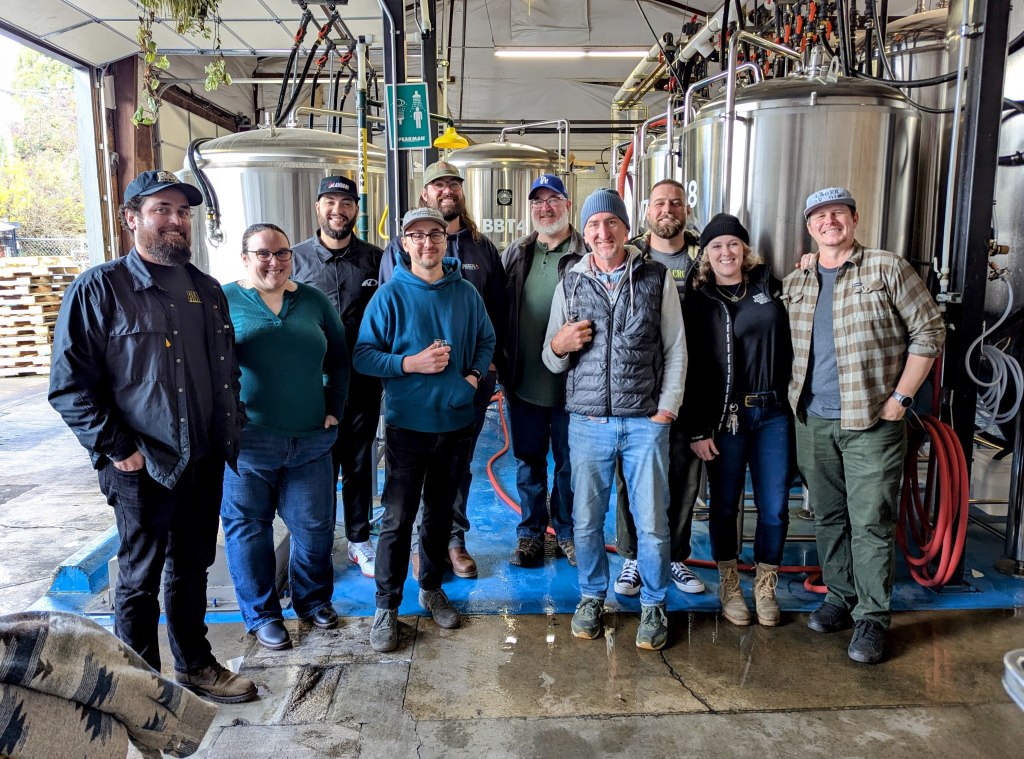
It should be no secret to those who read my content that I work for Day One Distribution, a nearly ten-year-old outfit that’s roughly one-seventh the size of Point Blank, if not smaller. Upon completion of the Columbia/Point Bank merger, Day One will become Oregon’s largest independent all craft beer distributor.
Having done this job long enough to watch Day One grow from 5 to 30+ employees, seeing the shuttering of Running Man Distributing and High Road Distribution, the evolution of Shelton Brothers Oregon into Upstanding Distribution (and their purchase of Alebriated Distribution), the success of Fort George Distribution on the north coast of Oregon, and the creation of Block 15 Distribution, it’s important to remember that there’s still a lot of craft beer being independently and self-distributed in Oregon.
While I’ve never worked for any other distributors in Oregon, I can speak to what makes Day One unique, and more importantly, how we’ve become a model for success in the state.
First and foremost, we began as a specialty distributor when our founder Robby Roda wanted to bring in a few unique brands from Southern California (where he once worked in the industry) for special events. And just like that, Day One was off and running, bringing in limited drops of fresh beer from smaller breweries who sent beer to Oregon only a few times a year.
While Day One still utilizes this approach for a number of brands across the country, it’s reputation has drawn new local brands into the fold, slowly building our portfolio to include a steady supply from growing suppliers such as Untitled Art, Great Notion, Yonder Cider, Lion Heart Kombucha, Hetty Alice, Chuckanut Brewery, Grains of Wrath, Ruse and more.
All of this is say that we occupy a rare middle-ground in the market. We’ve become large enough to build a small team of merchandisers for grocery accounts, drawn in some of the best talent to represent ourselves with an experienced team of salespeople and drivers, yet also nimble enough to pivot if necessary. We offer something larger distributors can’t: exciting brands and flexibility.
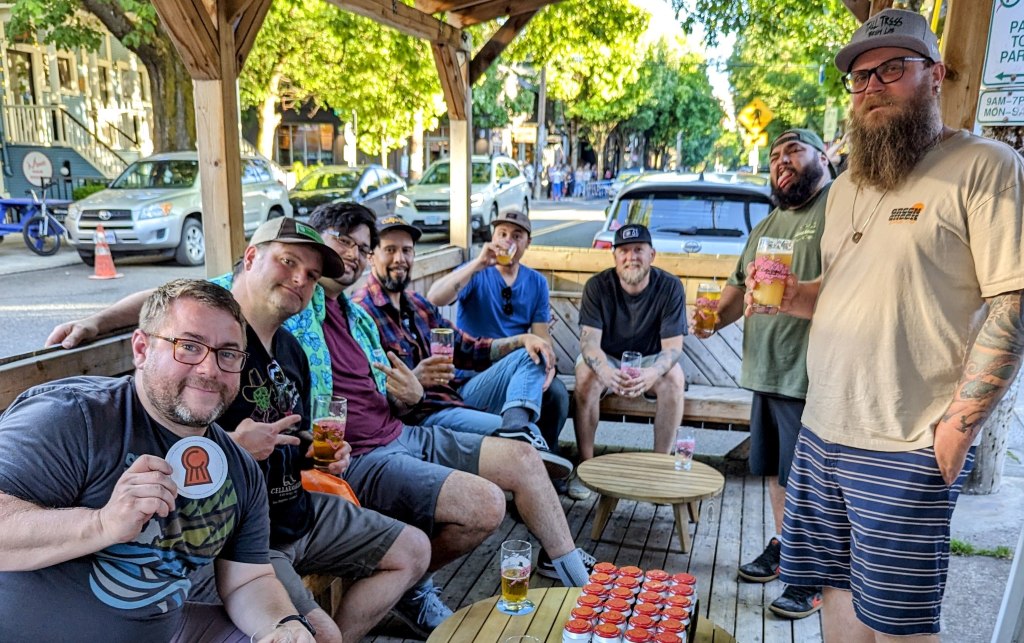
Take for instance the work we’ve done with Function PDX. Their unique business model requires the shipment and delivery of two brands each month. While Day One hasn’t been their sole wholesaler, and won’t be again this year, we do offer the capability to ship in small orders a few times a month. And when you take into consideration the depth and breadth of our catalog of exciting brands, it’s no wonder we’ve had more brands featured at Function than any other distributor.
In many ways, this relationship is indicative of how we supply the Portland market. We have the ability to deliver to accounts throughout Portland five days a week, we deliver to Beaverton, Hillsboro, Salem, Eugene, and Bend twice a week, plus parts of Southern Oregon once a week, all without satellite warehouses.
When all is said and done, Day One has upped the ante for what independent craft beer focused distribution can be in the Pacific Northwest. As we continue to grow and work closely with brands to help them grow, we also learn from each other about the market and best practices for effective strategies as the industry continues to evolve and fluctuate.
Where Things Go From Here…
While it’s only been a week since the announcement of this pending merger of two of the state’s largest distributors, it still gives me pause and concern about where craft beer in Oregon is headed and the sustainability of small distribution or even self-distribution.
What happens to the brands who don’t align with, nor are unable to adapt to the model Columbia operates within? What are their options if that does happen and how many brands can Oregon’s small distributors potentially take on yet still be sustainable relationships for all involved?
Before last week, the capacity for smaller distributors to bring on more brands was already limited, with each entity already dealing with some market uncertainty, potentially limited capital investment, and/or already feeling the strain from a vast number of smaller breweries being under represented.
My greatest concern is a continued market consolidation that reaches a point where America found itself in the 1960s through 1980s: rife with mass produced beer made by a handful of industrial breweries, with even regional breweries succumbing to their dominance in the market. While I don’t see that happening, we are living in unusual times, rife with volatility.
It is my hope that Columbia is able to stick to their pledge to have Point Blank operate as their own dedicated craft beer division. Concurrently, I am optimistic that the other independent distributors in the state can continue to support and sustain the success of smaller brands.
Oregon’s beverage distribution future is anyone’s guess at this point and we won’t know how things are gonna shake out until the dust settles. Very soon we’ll all have a better gauge of where we are and what the resulting balance of brands, or lack thereof, will be in the Oregon Market.
The most ideal results we can ask for are those we actively pursue ourselves. To see our favorite breweries, taprooms, or even distributors thrive, we should act as their best stewards, supporting their work one purchase at a time. For if we do that, invest in the places and people we love, then that’s the best we can do.
Point Blank to Remain a Craft-Focused Division within Columbia, Preserving Supplier and Retailer Relationships and Service
WILSONVILLE, Oregon – January 26, 2026 – Columbia Distributing today announced it has entered into an agreement to acquire Point Blank Distributing, a respected Oregon craft-focused distributor, with the transaction expected to close on March 31, 2026.
Point Blank has spent more than 25 years building deep relationships with craft breweries and retailers across Oregon, earning a reputation for disciplined execution, on-premise expertise, and service-first partnership. Columbia’s acquisition is designed to preserve those strengths while providing additional long-term investment, infrastructure, and support for Point Blank’s suppliers and customers.
Following the close, Point Blank will operate as a dedicated craft beer division within Columbia, maintaining its craft-first focus, service model, and brewer relationships—now backed by Columbia’s statewide logistics network, unmatched merchandising and category resources.
“This is a relationship-driven decision, first and foremost,” said Chris Steffanci, President and CEO of Columbia Distributing. “Point Blank has built something special by staying focused on craft, service, and trust. Our goal is simple: protect what makes Point Blank successful and strengthen it with long-term investment, people, and infrastructure that help suppliers and retailers grow.”
For Point Blank’s supplier and retail partners, the transition is designed to be seamless. Day-to-day service, sales relationships, and portfolio focus will remain consistent, supported by expanded capabilities that enhance execution and reach.
“I started my career at Columbia and cut my teeth there for 15 years. This new partnership sets our craft partners up for success with more resources and more reach. This is going to be a great opportunity for their long-term growth,” said Scott Willis, Owner of Point Blank Distributing.
Several longtime Point Blank brewers also expressed confidence in the transition.
“For almost 14 years, pFriem has had an amazing partnership with Point Blank Distributing. They have been deeply committed to the consumer and our team and have been a great representative of our brand. We have also had the opportunity to work with Columbia in Washington, where we have an excellent partner that takes great care of both the customer and our brand. We are excited for the two to join forces in Oregon to continue the customer service platform that Point Blank has built, backed by the scale and strength of Columbia—creating a stronger resource to keep our customers happy by delivering fresh, cold-stored beer across the state,” said Josh Pfriem, co-founder of pFriem Family Brewers.
“Point Blank has been an outstanding brand builder and executor from the outset. The Point Blank team’s skill and work ethic over the last decade helped propel Boneyard RPM IPA to become the top craft beer product in Oregon. Partnering with Columbia will further enhance Point Blank’s ability to be effective across more channels and a broader account universe. This is the next big step for the Boneyard brand, and we couldn’t be happier to see our two most important distributor partners come together,” said Peter Skrbek, CEO of Deschutes Brewery.
By combining Point Blank’s craft expertise with Columbia’s operational scale, the transaction creates a durable growth platform for craft beer in Oregon—one that prioritizes brand stewardship, service quality, and long-term partnerships. “This is about continuity and opportunity,” added Steffanci. “We’re committed to earning trust every day—just as Point Blank has done for decades.”
Press Release sourced from Washington Beer Blog


Thanks for capturing all of this!
Sara Szymanski Owner Threshold Brewing & Blending 403 SE 79th Ave Portland, OR 97215 http://www.threshold.beer http://www.threshold.beer
LikeLike
Thanks for the kind words Sara! See y’all soon 🙂
LikeLike