My Pommelier Journey & The Growth of Craft Cider
Living in the Pacific Northwest offers one of the most unique and all encompassing experiences within the realm of craft cider.
One of the most exciting draws for me to relocate from Minnesota to Oregon 16 years ago was the allure of being able to immerse myself in the craft beer scene. What I didn’t know at the time, much less expect, was the depth and breadth of not only craft cider, but the history and culture that surrounds it.
My first hard cider experience harkens back to some of the first alcoholic beverages I sampled while attending college in Fort Collins in 1995-1996. The only ones I recall trying at the time were Strongbow Cider from the UK and Woodchuck from Vermont; the former was pretty pedestrian, while the latter was a more exciting and adventurous quaff.
Flash forward to arriving in Portland in 2010: none of the local cider offerings really drew me in until I found Reverend Nat’s Hard Cider in the Summer of 2017, then Cider Riot in the Fall of 2018.

Both Nat and Abram, respectively, brought a creative and a craft beer culture vibe to cider unlike any producers I’d met before. And in my book, it’s these two local craftsmen – each focused on the history as well as the experimental potential of cider, that really pushed Portland’s specialty hard cider scene forward.
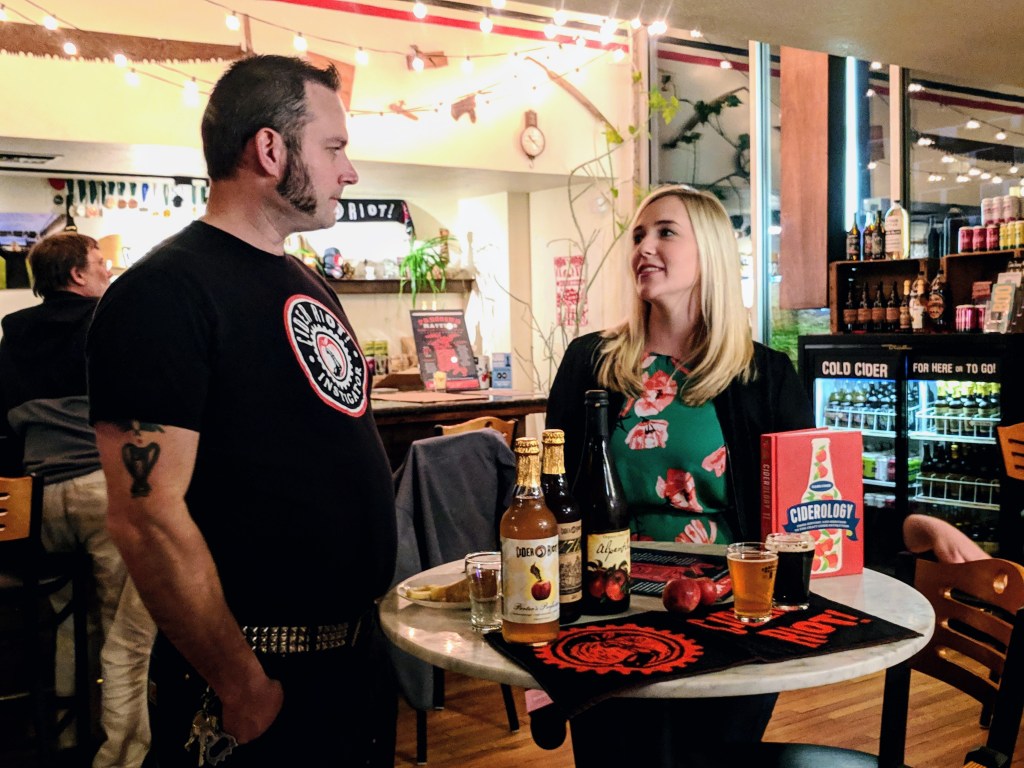
Yet it’s only over the past few years that I decided to dive head first into what cider is all about by trying most everything available and learning from the pros about why this is such a special and unique beverage.
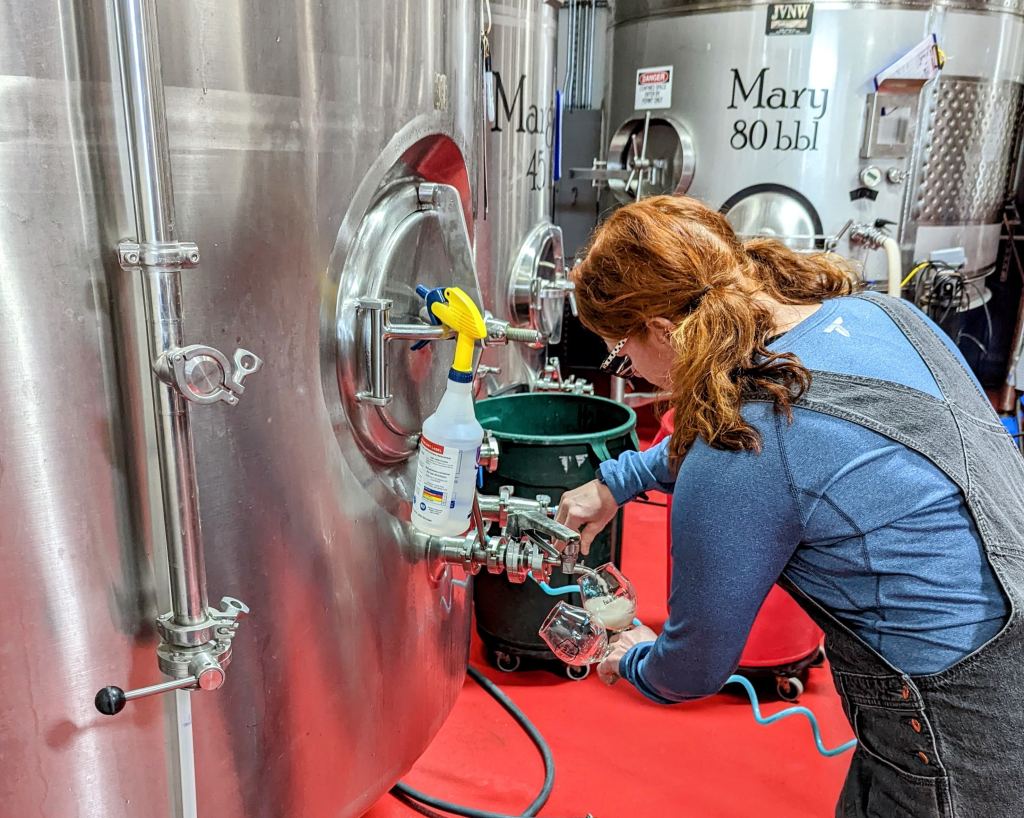
My appreciation for cider really began to solidify after meeting with Christine Walter at Bauman’s Farm & Garden in Oregon’s Willamette Valley. Visiting on a packaging day in the Spring of 2022, Christine gave me a tour of their sprawling property and explained to me how her love for cider was inspired by Abram’s passion.
Finally, what roped me in further was the growth of cider brands in my employer’s portfolio, as Day One Distribution has historically worked with 9 local cider brands, with it’s largest brands signing on over the past 3 years.
As my interest grew, not to mention the openings of both Bauman’s on Oak and Alchemy Cider, I began to spend more time with local cider aficionados, attended more cider events (including my first CiderCon in 2024), and soon realized I needed more education on the subject. Thus began my pursuit to become trained as a Certified Cider Guide.
The Road to Pommelier
Those who work in the industries of Wine and Beer are no doubt familiar with the professional certifications of Sommelier and Cicerone, respectively. The Sommelier program was founded in 1969 and the Cicerone program in 2007. The American Cider Association’s certification was created in 2016, with the Level 2 or Pommelier Certification being created in 2019.
A few months ago I was invited by local Pommelier & Licensed Educator Jessica Arlich to participate in an afternoon of level 1 training to become a Certified Cider Guide, the first step towards becoming a Pommelier, which took place at Bauman’s on Oak. While I’ve been told there are plans to continue growing the ACA’s certification program by adding at least another level of certification, nothing concrete has been announced or created as of yet.
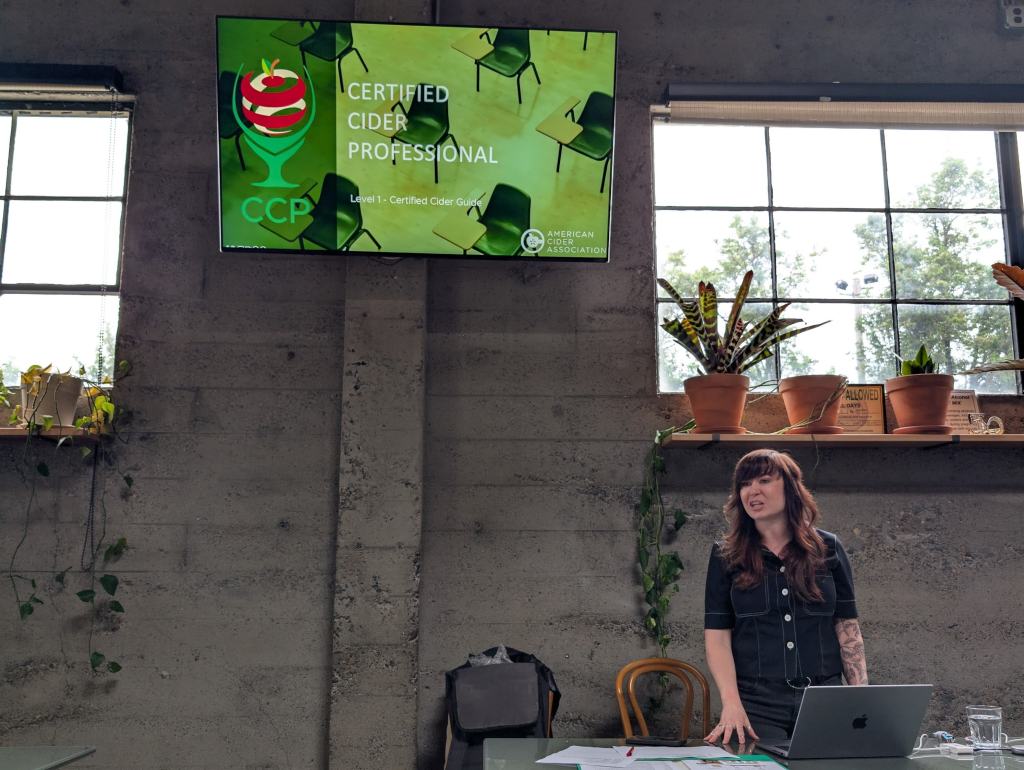
The level 1 course is extremely straight forward, delving into an overview of ciders foundations including apple & pear varietals, production methods, flavor components (i.e. the balance of acid & tannin), where cider apples are grown & where cider is popular, cider styles & use of adjuncts, flavors & off-flavors, food pairings, ways to properly serve cider, sensory analysis, and more.
While covering so many topics over a mere 4 hours may sound overwhelming, time flew by via a well crafted presentation, copious note taking, and Jessica’s willingness to answer questions throughout made it a fun and interesting education on all things cider.
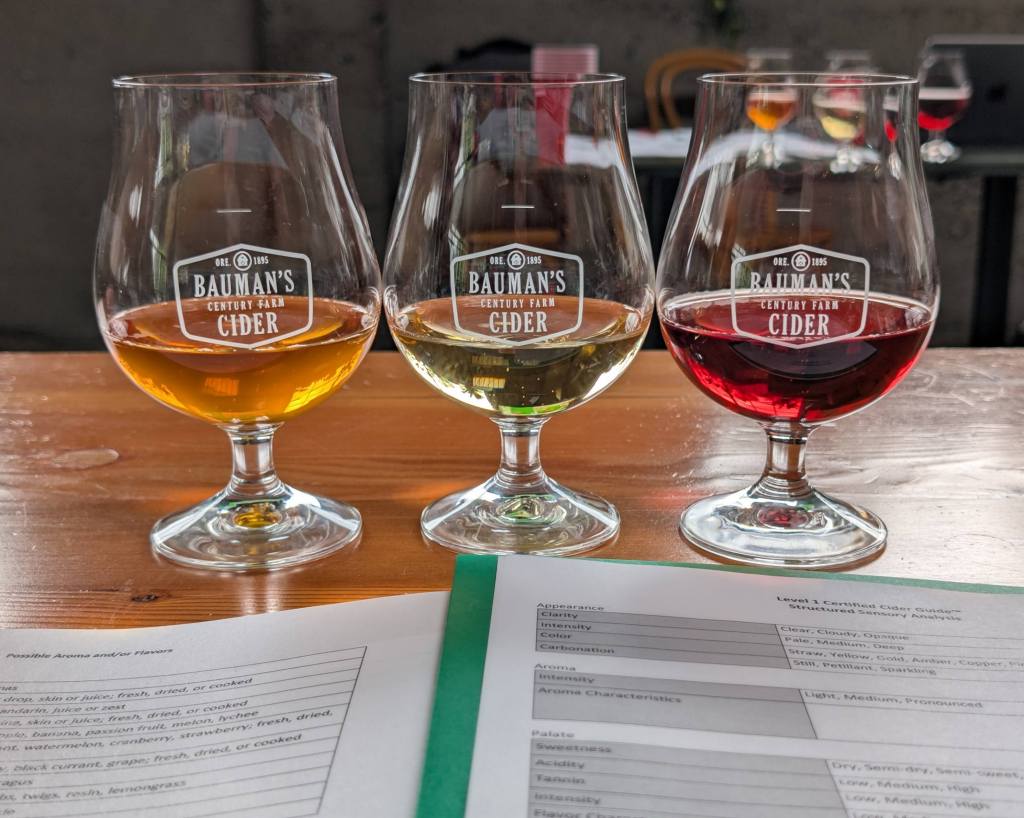
To finish the session, we spent about 1 hour analyzing and tasting 3 different draft cider pours from Bauman’s. It was ever so helpful to immediately put to use our absorbed knowledge about cider apples, carbonation, color, acid, and tannins.
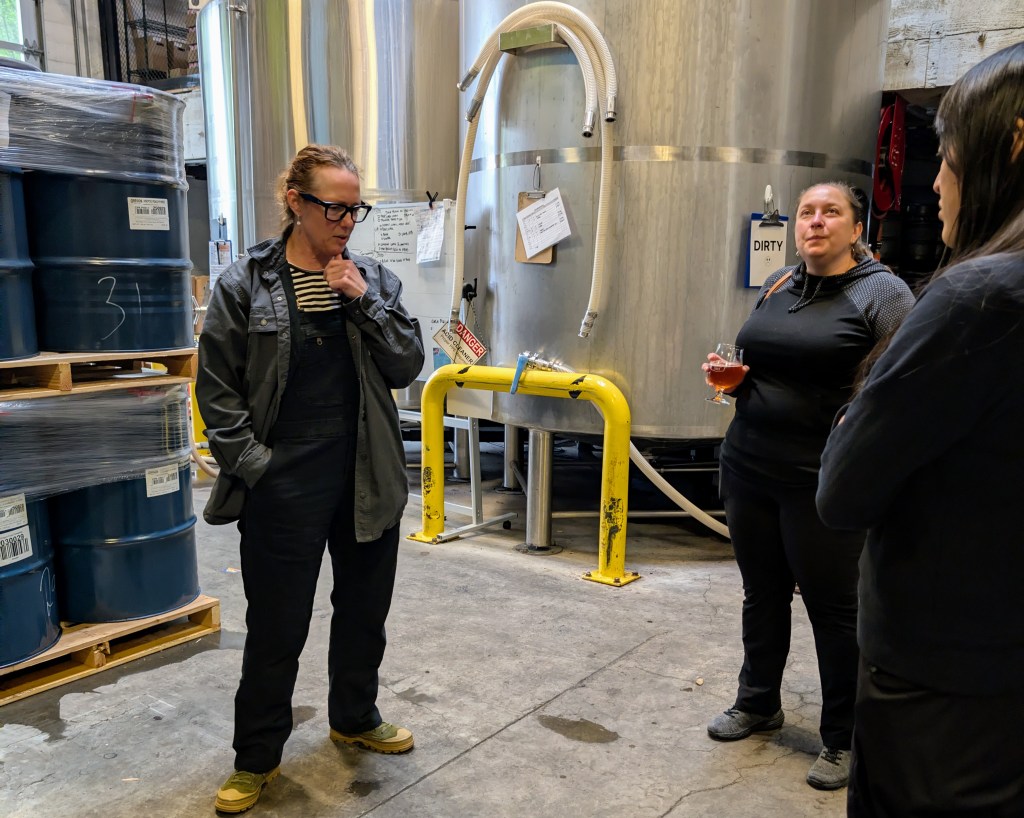
Upon completion of the analysis portion, owner Christine Walter provided us a quick tour of the relatively new production space Bauman’s Cider now inhabits in SE Portland. From on-site fermentation and blending, to packaging in cans or bottles, we learned a little bit of everything about how their process works.
About one week later I took the timed online exam consisting of 60 multiple questions and scored above the required 85% correct to earn my certification! And in case you were wondering, yes there is a level 2 Certified Pommelier exam happening August 30th, also at Bauman’s on Oak, though I don’t think I’m quite ready for that.
My next steps are to purchase a Certified Pommelier™ Study Guide, attend at least one of the sensory analysis workshops (in person and/or via webinar), and amass more knowledge via the array of online study aids & guides available on the ACA’s website, plus their videos available on YouTube.
The Importance of Cider Certification
Working for a specialty alcoholic beverage distributor in the Pacific Northwest has allowed me to witness first hand the unique culture cider occupies, especially in the city of Portland. Both Oregon and it’s largest city consume the most cider per capita of any state or city in the United States.
Additionally, cider continues to grow within the craft segment, with Portland in particular offering more canned and draft cider options at restaurants, bars, bottle shops, taprooms, and convenience stores than ever before.

While cider has historically been a go-to option for gluten free drinkers, it’s also gained a greater following among drinkers traditionally drawn to cocktails and craft beer. More varieties and brands of cider are available than ever before, from traditional dry ciders and cocktail-inspired options, to experimental approaches and fruited or adjunct ciders, there is a greater diversity of flavor within cider today than we’ve ever seen.
So if you’re employed as a server or in a hospitality position and are routinely asked about the ciders available on hand or working in a store that sells an ever growing variety of cider brands, being able to provide clear and concise answers to customers questions about cider styles and pairings is more complicated than ever.
And lets not forget the professional beer judges and home brewers out there who’ve been educated in the Beer Judge Certification Program. Their guidelines offer 20 different categories for cider judging, but how many BJCP judges who are better versed in the world or beer, not cider, feel fully confident in their ability to analyze and judge cider styles?
It’s only been over the past two years that both the World Beer Cup and the Great American Beer Festival have added judging for cider, in a variety of categories. Pursuing a Cider Guide Certification and/or becoming a Certified Pommelier seems more useful to beer industry professionals than ever before.
If you’re wanting to become a Certified Cider Guide and/or a Certified Pommelier, be sure to learn more on the American Cider Association’s website or if you have any questions, feel free to reach out to Jessica Arlich or you can even send me an email too.
Categories
Certification, Cider, commentary, Education, Industry, Portland Cider, Portland Oregon


