Reports of Craft Beer’s Death Have Been Greatly Exaggerated
Back in 1897, having been out of the public eye for some time and with rumors swirling about his possible death, Mark Twain was contacted by an English reporter from the New York Journal. His response was to be expected…
Mark Twain was undecided whether to be more amused or annoyed when a Journal representative informed him today of the report in New York that he was dying in poverty in London … The great humorist, while not perhaps very robust, is in the best of health. He said: ‘I can understand perfectly how the report of my illness got about, I have even heard on good authority that I was dead. James Ross Clemens, a cousin of mine, was seriously ill two or three weeks ago in London, but is well now. The report of my illness grew out of his illness. The report of my death was an exaggeration.’
Indeed, Twain’s original quote that “the report of his death had been an exaggeration” has in evolved into a multitude of forms since a biography authored by Albert Bigelow Paine two years after his death in 1910 noted that “Twain had told the reporter, ‘Just say the report of my death has been grossly exaggerated.’”

Personally knowing the incorrect version of this quote, likely due to some other bastardization of it in film or television, seemed an apt status of the craft beer industry’s current state of health: despite wildly exaggerated claims, it’s still in good shape, yet caution is in the wind.
The arc of craft beer is long and complicated, with the landscape changing constantly, new brands coming and going, not to mention a huge change in demographics. As ships at sea, many breweries are being tossed about, dealing with rough seas that haven’t really abated since the pandemic.
As we are often wont to do as humans, the reasons behind brewery closures are rarely as black or white we perceive them to be. Those constant changes in the present craft beer environment and reasons for growth and decline are as diverse as the people who own the businesses themselves.
Since the first big growth period of craft beer in the 90’s, we’ve seen a multitude of booms and busts, sales slowdowns and hype waves, and recently a slowing of openings, reduced demand, and yes, some well publicized closures.
Yet in the end, as is too often the case, the hobby that becomes a business, then ultimately a grind, becomes overwhelming when the winds change direction.
We’ve been here before, it just feels different because the industry has evolved to the point of being fearless – rising above the whims of the market’s volatility, driven by steady demand.
And for some, especially now as we witness the closures of established regional and national breweries, it can be difficult to sustain a quality product, continue innovating, and pay the bills if you’re not constantly tacking sail to handle the headwinds.
But not all is lost and we’ll get to that…
The Bad News

I generally take the words often espoused by doomsayers with a grain of salt because there’s always a panoply of reasons why breweries such as Rogue Ales, the latest in a series of high profile closures, end up shuttering.
The current state of the beer industry should not be judged by the strongest or weakest of it’s ilk, but more so the median operations – the brewpubs, neighborhood spots, and agile regional players.
If there is any concern I have at present about the craft beer market in Portland, it’s what I’m fearing to be the aging out of craft beer consumers. Anyone who frequents local brewpubs and taprooms in the Portland area know that too often it’s patronage more often resembles those of a church than that of a shopping mall.
While the youngest of the Millennials are generally less engaged with beer, and alcohol in general, than older generations, so far Generation Z appears even less interested.
The pandemic, tariffs, inflation, and other economic factors have impacted America’s youngest generation’s buying decisions as (potential) beer drinkers, though I believe it’s an even deeper and more complicated set of reasons that impact their buying behaviors.
How about the near universal access they have to profuse information detailing the detriments of alcohol? Or how beer now competes with the most abundant set of beverage options ever available? What about the ever growing legal access to cannabinoids, in all formats imaginable?
Even worse, to simply chalk up one’s troubles to said changes, yet do nothing but complain about these problems, doesn’t help your situation either.
That said, for consumers who love craft beer and those who own, operate or work with craft breweries, there is only so much that can be done, on your own, to reverse generational changes – that ship has sailed.
Some Context
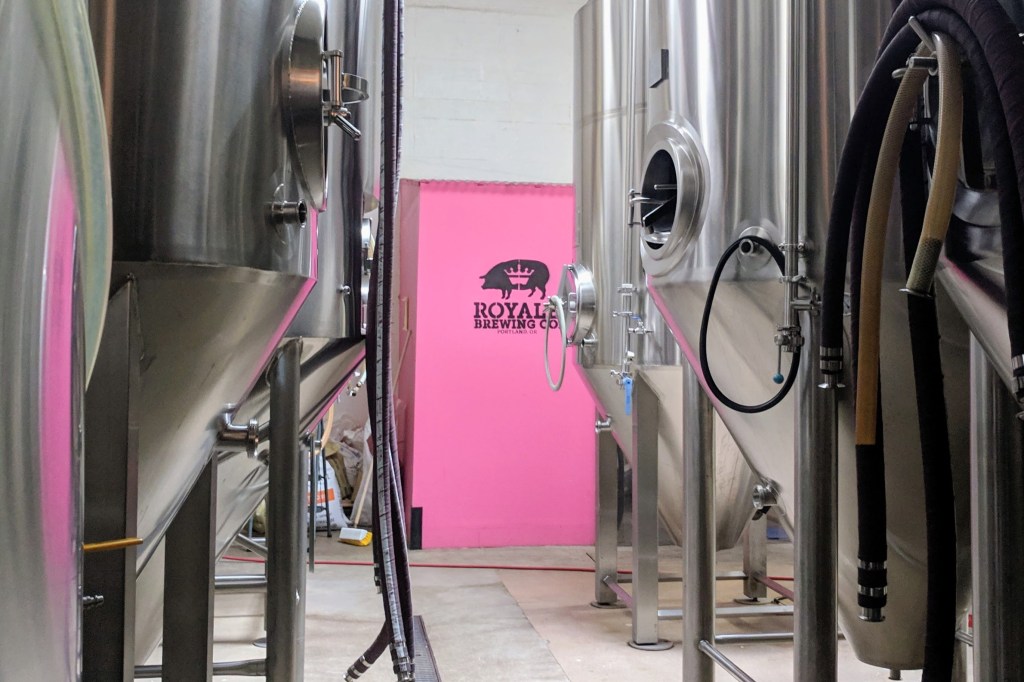
Over 6 years ago I wrote an article about Portland’s “Off The Beaten Path” breweries – a set of 14 smaller neighborhood brewpubs that I thought were a bit overshadowed. Since that post in 2019, all but three of those 14 has closed or changed ownership.
For greater perspective, we’re talking about the 3rd time in craft beer’s 45 year history that we’ve seen a marked slowdown of the industry, most commonly expressed by the Brewers Association & media as more closures than openings.
The most notable transformations in the history of American craft beer have taken place over a decade plus. The initial explosion of breweries saw the total in operation grow from 284 in 1990 to an early peak of 1,566 in 2000. The industry then hit a dormant period where only 247 breweries opened over a decade.
Yet once the economy emerged from the 2008-2010 mortgage crisis, fortunes changed quickly, as the number of breweries increased from 1,813 in 2010 to 9,092 in 2020, an increase of over 400 percent.
Since then the total number of breweries in America has risen to 9,922 as of 2024 despite the first year since the early 2000s where closures outpaced openings, with Microbreweries declining 3% and Large/Non-Craft breweries declining 13%.
As noted by the Brewers Association’s President & CEO Bart Watson at their fall conference, “the early craft boom wasn’t ‘normal’ – cheap loans, sky-high demand, and relaxed laws made it easy to open a brewery. But now we’re in a mature, competitive market. You have to think like a hospitality brand, not just a brewery.”
Providing a stellar product, a neighborhood experience, a unique atmosphere, events, and good food are what you can control, resulting in fewer chances at failure amid a perfect storm.
Case Studies
I think it’s also important to look at recent success stories to see how breweries have found their own way to thrive via creative methods – whether they be tried and true or niche, focused on community, and/or simply great business practices.
Today in Oregon there are 6 different breweries who’ve all found success in different ways, yet each are different from the other and should be noted as effectively run businesses. Breakside, Brujos, Fort George, pFriem, Ruse, and Threshold have proven themselves adept despite the changes within the industry.
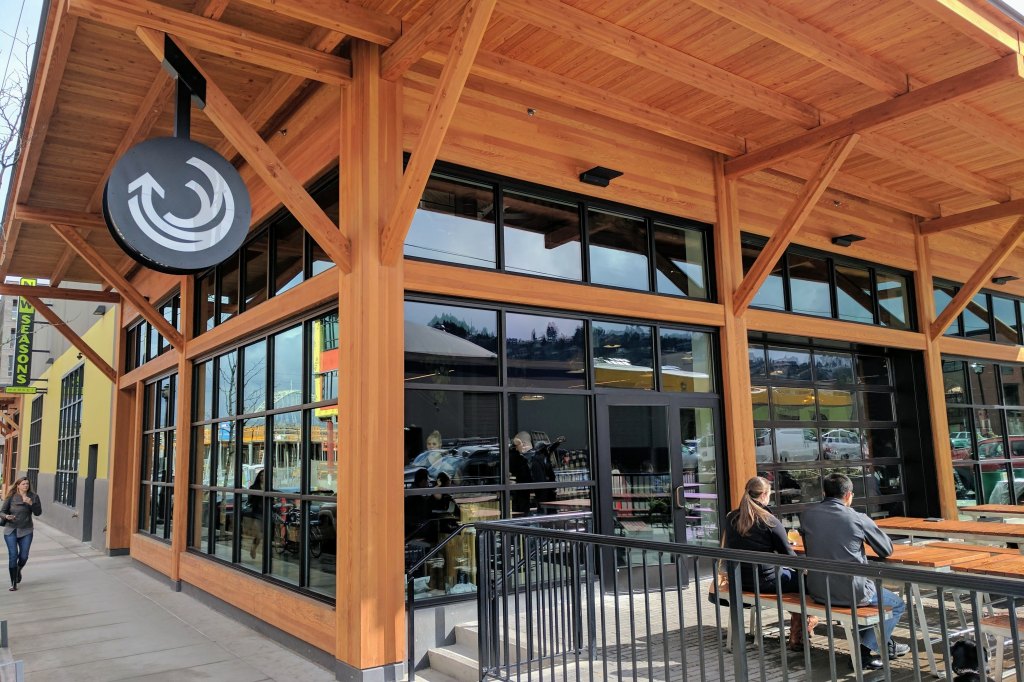
Breakside has shown the importance of diversification – not only in the quality of their award-winning beers, but also in business acumen: opening multiple taprooms, creating a broad distribution footprint, finding underserved markets, providing a unique experience, and offering elevated pub food options.
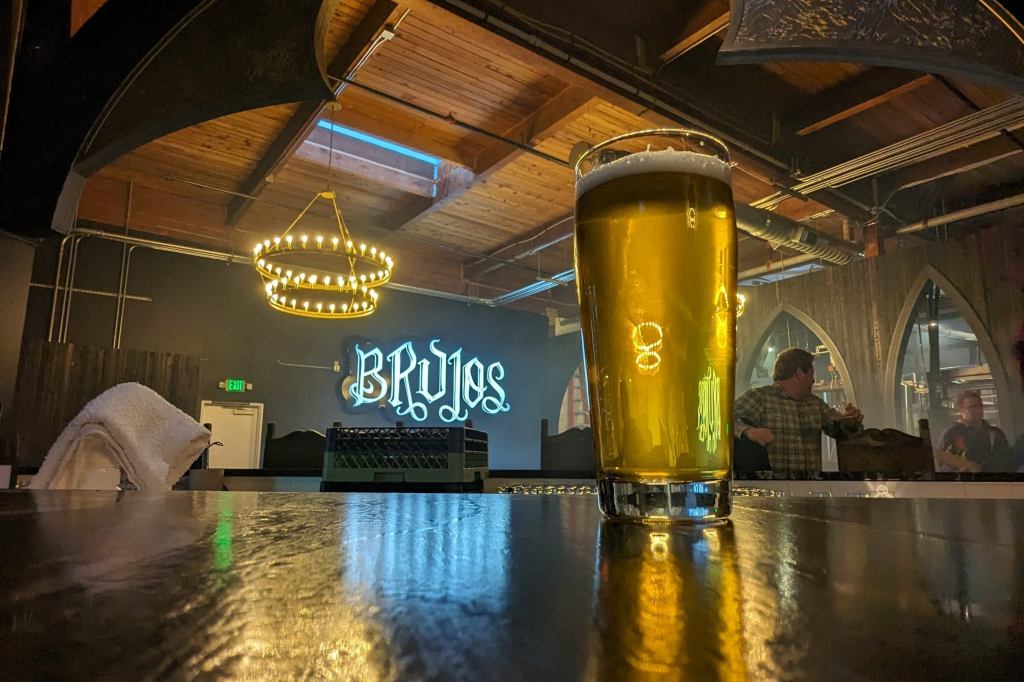
Brujos, initially known for their imperial hazy and pastry stout offerings, has shown resilience over the last 18 months by not growing too quickly, diversifying their output to include a variety of West Coast IPA and lagers, and have found steady success with El Viejón Taqueria taking residence in their sole NW location.

Fort George, more than just about any other brewery in the Pacific Northwest, has taken to heart the tourism-focused nature of their Astoria location and made it their strongest asset. Between their Festival of Dark Arts (effectively founding Oregon’s Stout Month) and Lupulin Extasy, the kick-off to the annual 3-Way collaboration IPA release, they’ve created a one of a kind location and experience.
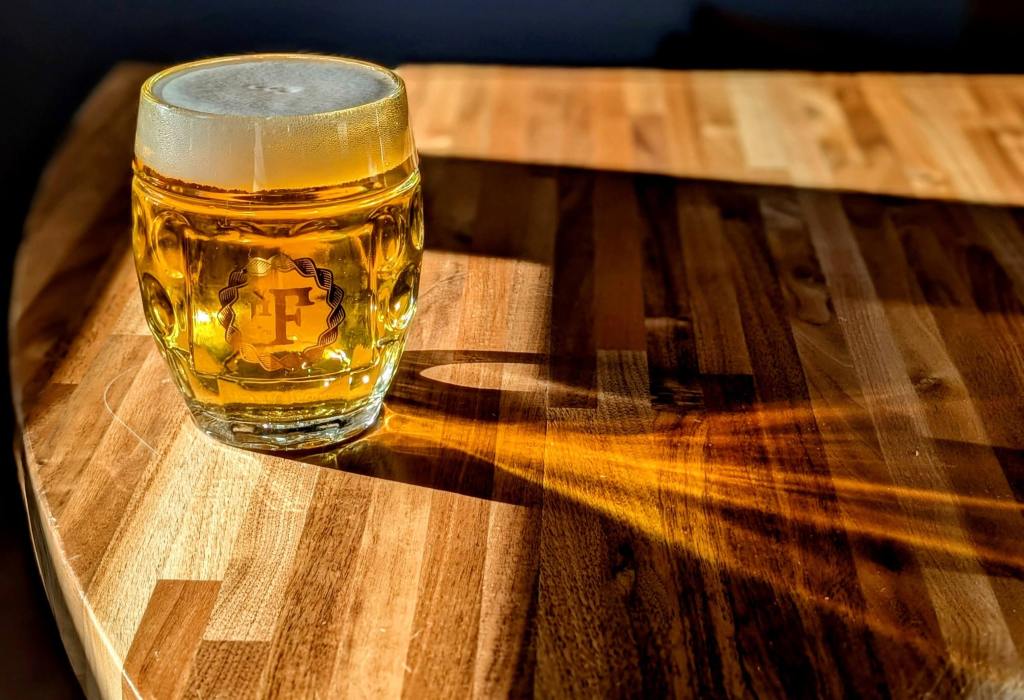
pFriem took a giant leap in 2025, opening their second location in Milwaukie. Known from the start for their diverse offerings – from foeder sours to IPAs, second-to-none hospitality, and best-in-the-industry food, this brewery is firing on all cylinders, like few others in the world.
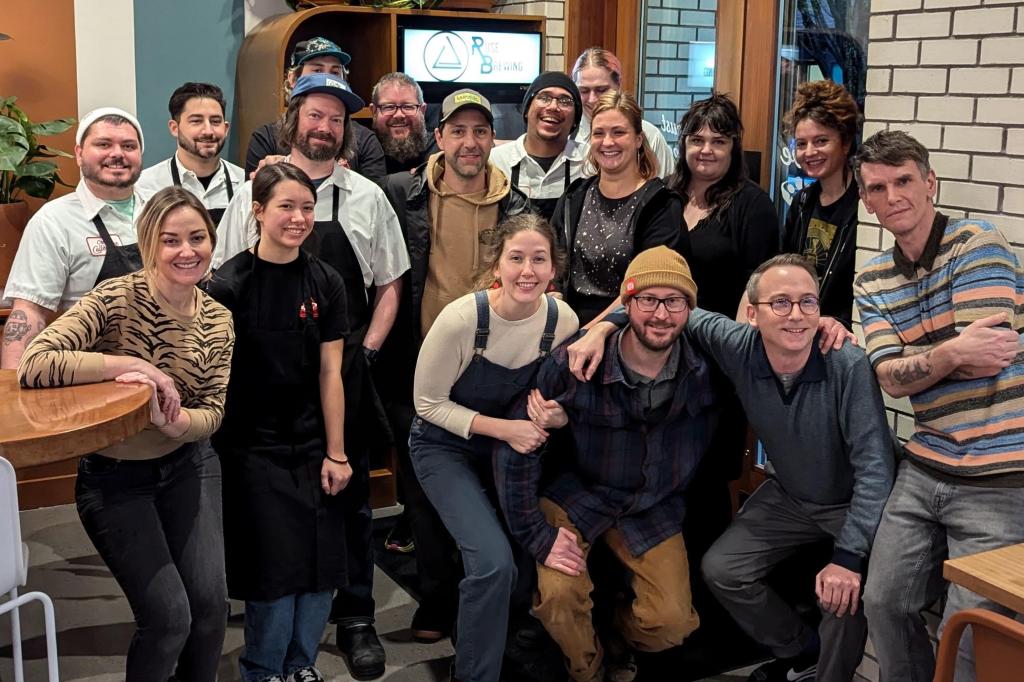
Ruse, now operating out of three locations, has found a foothold in the Portland-metro area by not only producing some of the most consistently unique beers – most notably their various award-winning IPAs and lagers, but also becoming the purveyor of one of the best Detroit-style pizzas around.
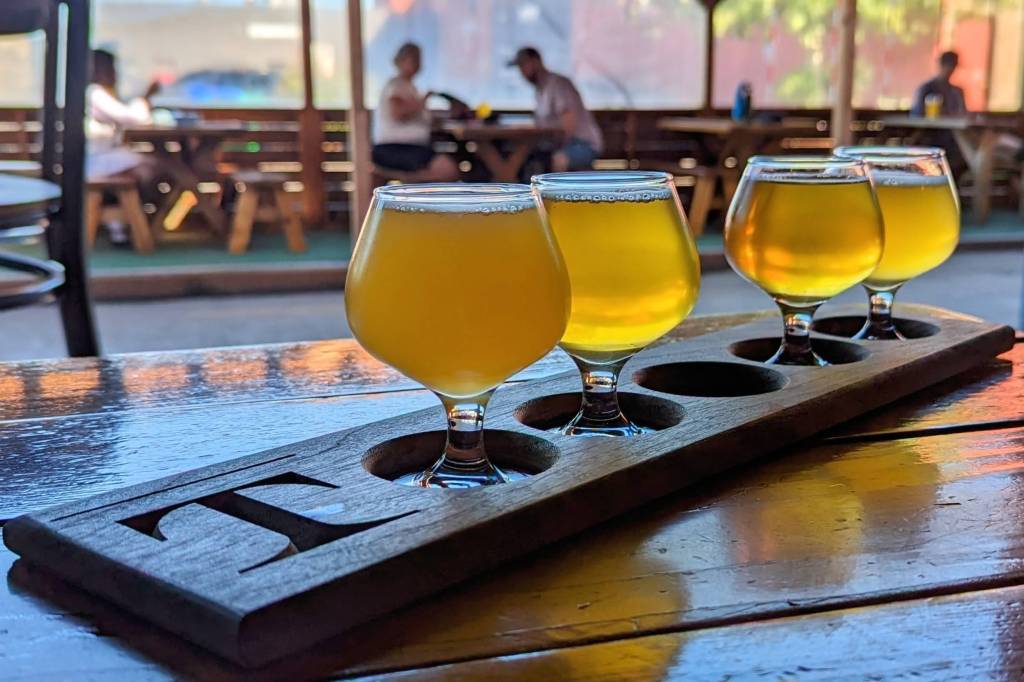
Threshold, one of those scrappy breweries who pivoted better than most during the pandemic, is the smallest brewery on this list, yet they may as well be the archetype for how to build a brewery around community. Their focus on award-winning Polish-styles and IPAs, a growing menu of accompanying food, plus neighborhood focused events are one-of-a-kind in the Pacific Northwest.
To be sure, there are another 5+ breweries in Oregon that one could sing the praises of, but these, to me, stand out as the ones to watch, as I believe them to be the standard bearers for what makes Oregon beer so diverse and exemplary.
The Good News
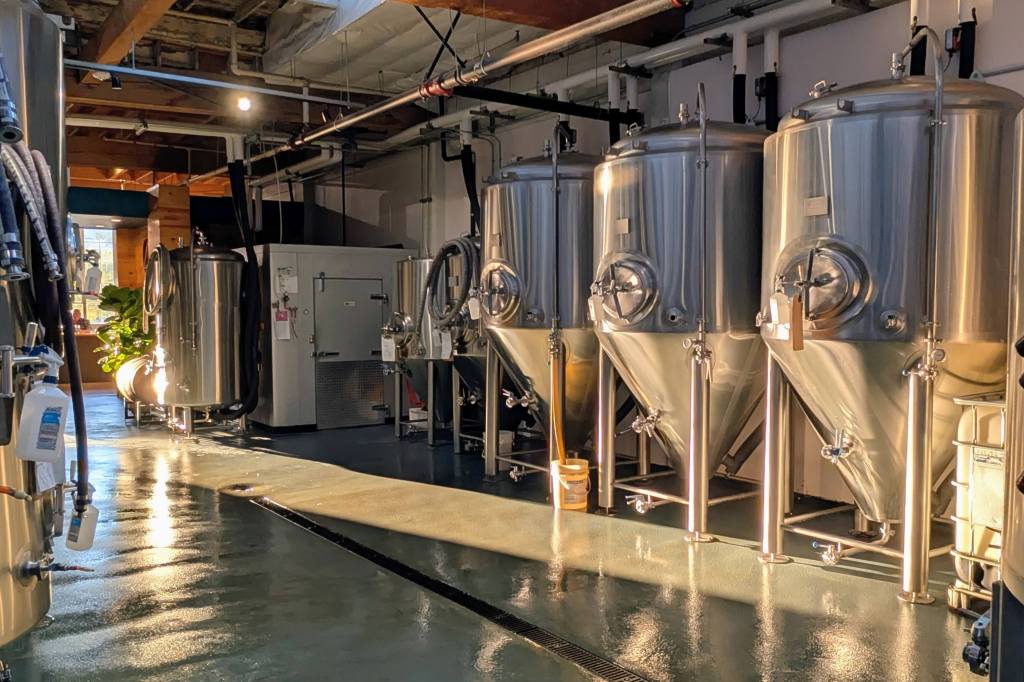
In looking at the positive stories happening around us as we speak, it’s important to keep their success in context to what’s working more broadly in the industry.
Where we do see growth is in relation to overall production from brewpubs and microbrewers/taprooms. Meanwhile, regional breweries, which are fewer in number, produce more annually than all the smaller categories combined.
These details are cause for optimism as I believe these numbers better reflect the strength of smaller neighborhood and “bottle shop brands” as opposed to larger and, often, dated endeavors more commonly found in large grocery chains.
So when you hear that sales or production is declining, don’t take it at face value as these are often numbers that reflect breweries with large outputs and traditional grocery IRI data, not those at craft beer specific locations.
I also think it’s worth noting the positive societal impact craft beer has had on neighborhoods and cities that few other major industries have had over the past 30 years.
Over the weekend I was talking with someone I’d just met about where they were from and he said Knoxville, TN. Naturally, I mentioned my interest in a younger brewery there name Xul that’s had success of late. He went on to tell me how the business district was in a bad place when he lived there, but has since been flourishing, due in part to the growth of craft beer in the area.
Like it or not, the continued steady success of the craft beer model in America has changed our culture and it could easily be argued that the brewpub has supplanted the church as the central gathering place in many cities. With that in mind, it’s important to remember that we still have nearly 10,000 breweries operating in this country. So yes, there will be more brewery closures, yet craft beer isn’t going anywhere just yet.
The report of craft beer’s death was an exaggeration.

 Craft Beer Scribe
This is a great piece Warren, thanks for writing it. Hope you are doing well!!
LikeLike
Appreciate the kind words Brent! Life is good up north, just as I hope it is for you and yours down south 🙂
LikeLike